
The Web Scraping Market Report 2025–2030 (Preview)
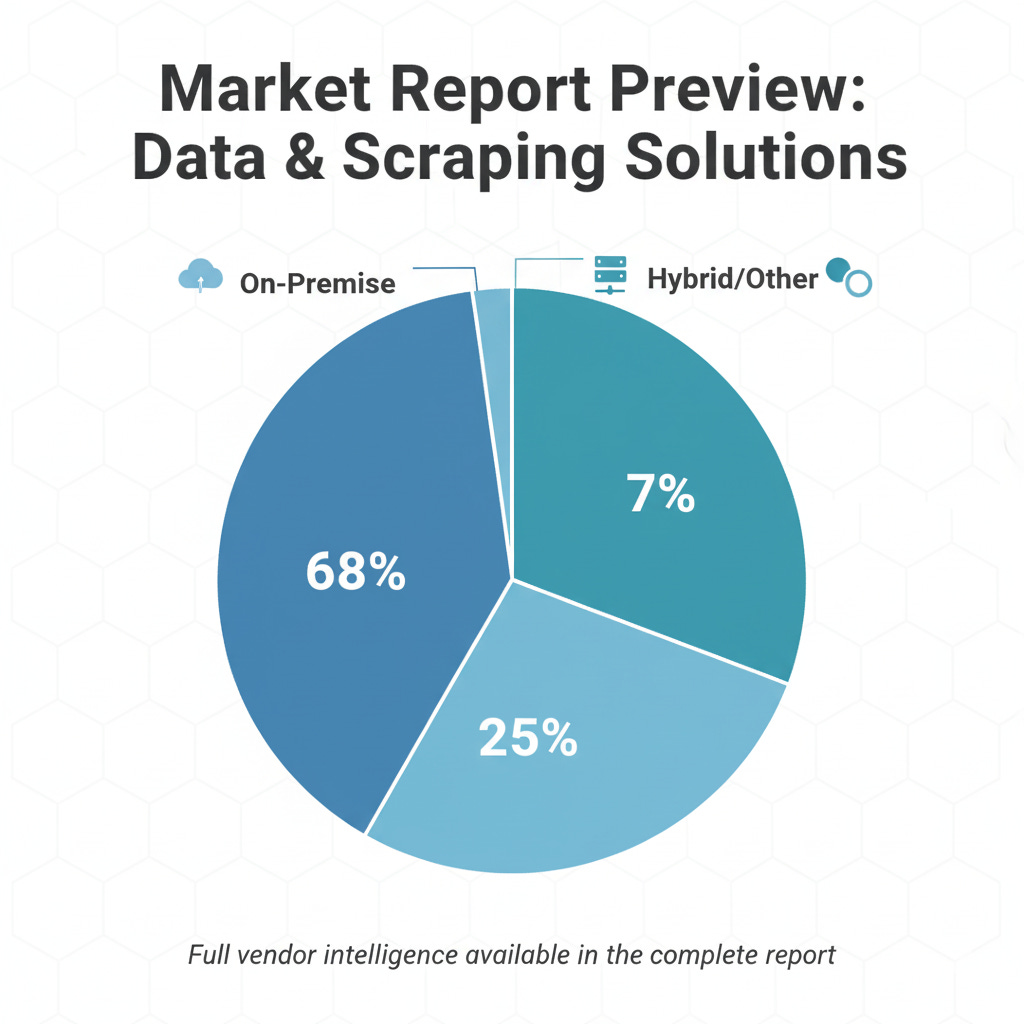
Cloud-first deployments account for 68% of the market and BFSI sector adoption is increasing, representing 30% of total market share. The global web scraping will see CAGR of ~11.9% through 2032.

The Rising Value of Data Extraction

The global web scraping software market was valued at approximately $1.01 billion in 2024 and is projected to grow at a CAGR of ~11.9% through 2032 (BrowserCat, Mordor Intelligence).
With real-time data fueling AI, competitive intelligence, and price monitoring, web scraping has become a strategic necessity across industries from e-commerce to finance. Companies that leverage efficient scraping solutions can outperform competitors in speed, insight, and operational efficiency.
Key questions the full report answers:
Which deployment models are gaining dominance in 2024?
Which sectors are driving adoption and how?
How do leading vendors compare in market share, capabilities, and pricing?
Executive Summary (Partial)
Global Market Size (2024): $1.01 billion
Projected CAGR (2025–2032): 11.9%
Major Trends:
Cloud-first deployments account for 68% of the market (Mordor Intelligence)
BFSI sector adoption is increasing, representing 30% of total market share
Price and competitive monitoring continues to be a major driver with high growth potential
Controversial Insight: Despite major vendor dominance, the market remains highly fragmented, leaving opportunities for niche providers and open-source frameworks.
Table of Contents (Teaser)
Market Overview — Introduction, definitions, and scope
Market Size & Forecast — Historical and projected global growth
Deployment Trends — Cloud vs. on-premise adoption
Industry Adoption — Sector-wise analysis including BFSI, e-commerce, real estate
Competitive Landscape — Major vendors, market share, and emerging disruptors
Regional Analysis — North America, Europe, APAC dynamics
Technological Advancements — AI/ML integration, headless browsers, cloud-native tools
Regulatory Landscape — GDPR, CCPA, hiQ vs. LinkedIn and other cases
Market Challenges — Technical, legal, and operational obstacles
Strategic Recommendations — Guidance for executives, product managers, and investors
Insights — What You’ll Discover
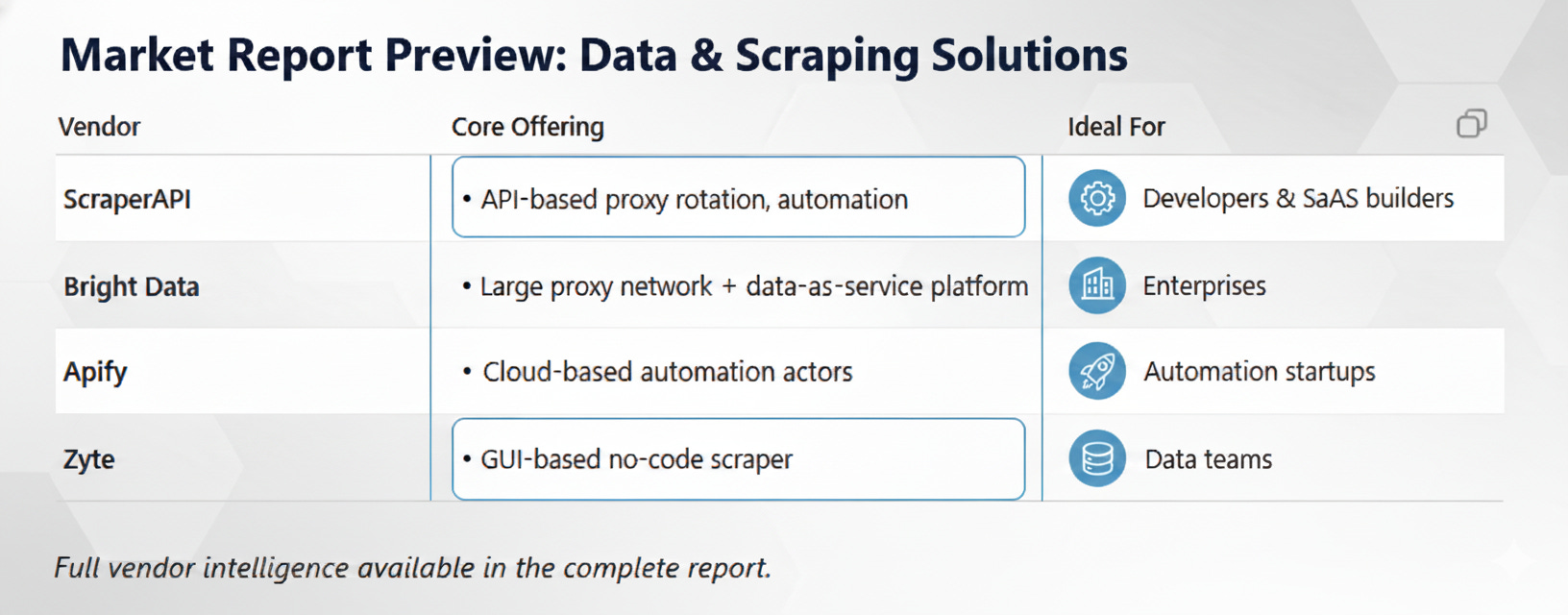
Market Leaders: Bright Data, Apify, and Octoparse dominate enterprise adoption; open-source frameworks like Scrapy remain heavily used by developers.
Emerging Trends: AI-based scraping agents are increasing efficiency, enabling automated detection of site changes and real-time extraction.
Regulatory Developments: The hiQ Labs vs. LinkedIn case continues to influence compliance and risk mitigation strategies.
Partial Vendor Comparison (Teaser):
5. Sample Table — Market Segmentation by Deployment (2024)
6. Methodology & Sources
Sources: Mordor Intelligence, BrowserCat, Market Research Future, Verified Market Research, Straits Research among others.
Methodology: Combines primary interviews, vendor reports, and secondary research to ensure accuracy and actionable insights.
7. Strategic Value
This report is designed for:
Executives evaluating build/buy strategies
Product Managers comparing vendor solutions
Investors analyzing market opportunities
Data Teams planning infrastructure and automation pipelines
Consultants advising clients on strategic initiatives
It provides actionable insights to navigate the rapidly evolving web scraping market.
The full report includes:
Complete vendor comparison (25+ companies)
Regional market breakdowns (NA, EU, APAC)
Pricing & ROI frameworks
Detailed legal and regulatory analysis
AI and emerging technology trends
Strategic recommendations and scenario planning